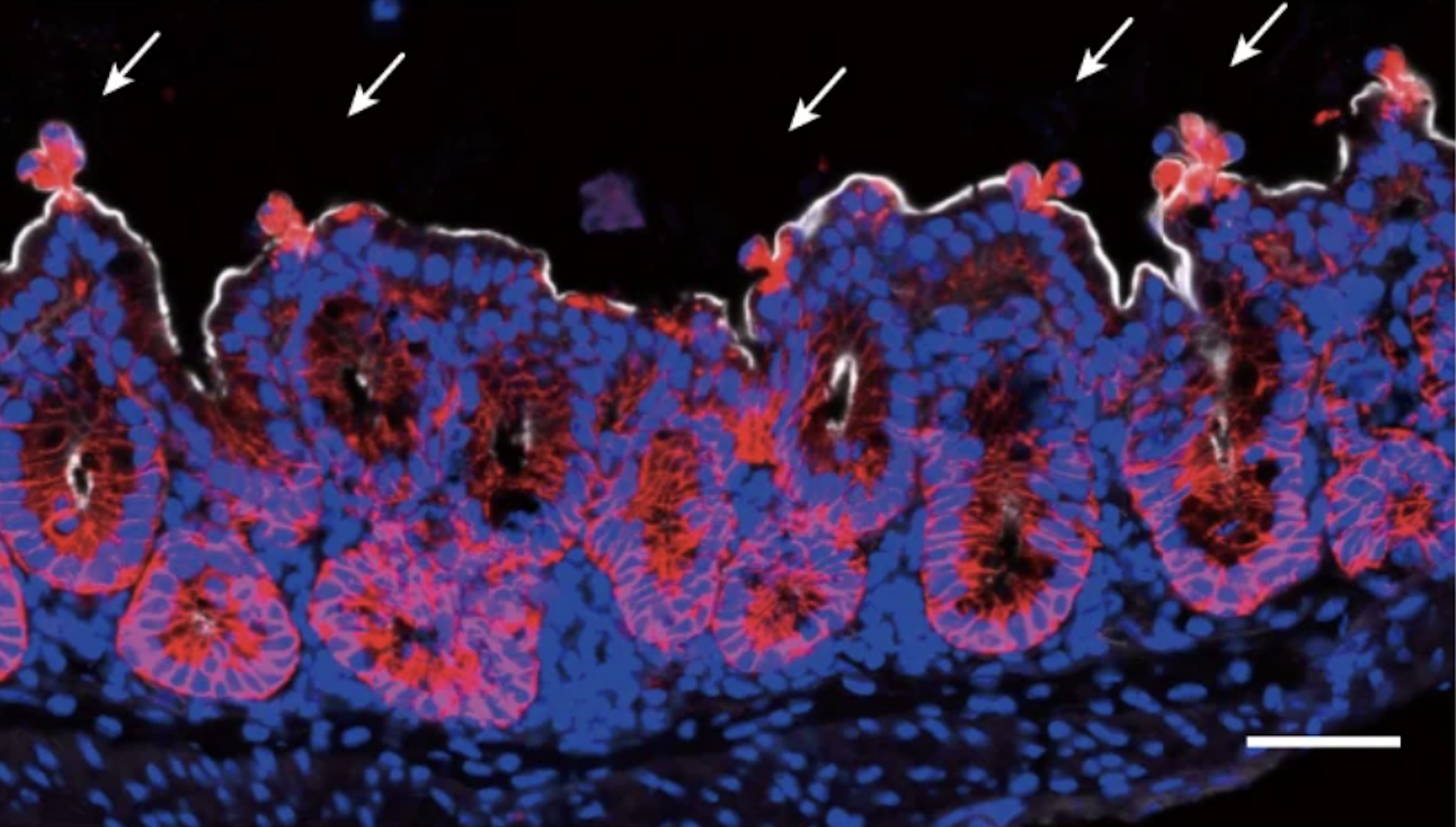
Fluorescence microscopy of IEC extrusion

The Science

Ongoing Projects

Fluorescence microscopy of IEC extrusion

We study environmental bacterial pathogens because they are powerful tools for discovery that reveal fundamental truths within the functioning of the innate immune system. We study diverse innate immune cells (including macrophages, neutrophils, and natural killer cells) as well as parenchymal cells that participate in innate defenses. We study the interaction between pathogens and hosts in vivo in mouse infection models, as well as in vitro in tissue culture.

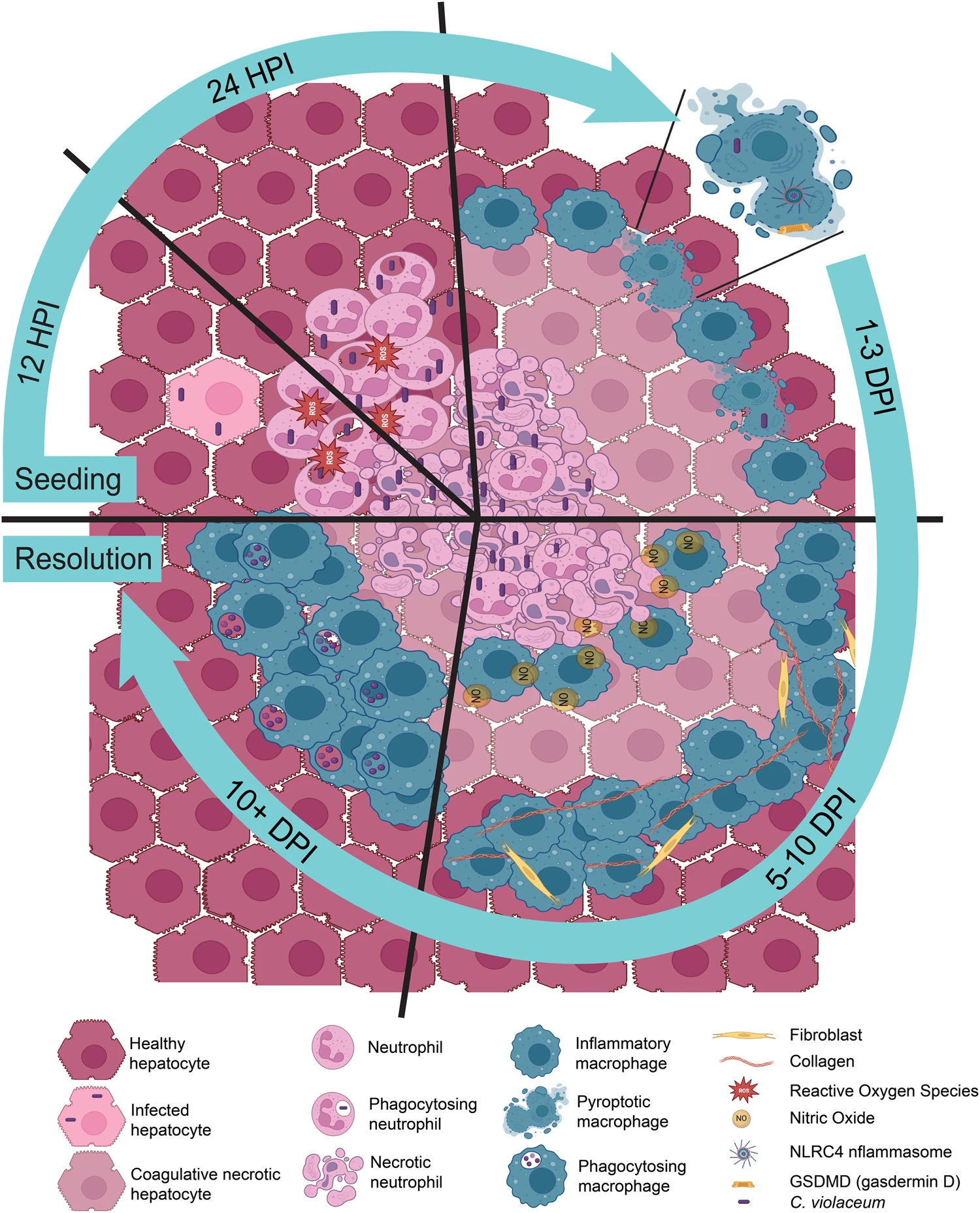
Illustration of innate granuloma response around Chromobacterium violaceum infection
01

Innate Granuloma Response and Chromobacterium violaceum

Granulomas are characterized by the organization of macrophages in tissues to fight infection or wall off a foreign body. Granulomas often form around infections that cannot be cleared, and their function is thought to prevent dissemination. Pathogens can persist within these granulomas for decades. These structures are defined by the presence of macrophages, but typically they are organized by T cells of the adaptive immune response.

While studying the innate defenses against the environmental bacterium Chromobacterium violaceum, we serendipitously discovered that mice form a picture-perfect granuloma around infected lesions in the liver. This granuloma forms within 5 days and then eradicates the bacteria over the next 5–14 days — all without help from T cells or other adaptive immune cells. The innate immune system can therefore form granulomas that are functionally perfect: they not only prevent dissemination, but also kill the bacteria. We are using this model system to understand the basic biology of the granuloma response.
Colony-forming unit data for Francisella philomiragia infection
02

Regulated Cell Death in Defense against Francisella philomiragia

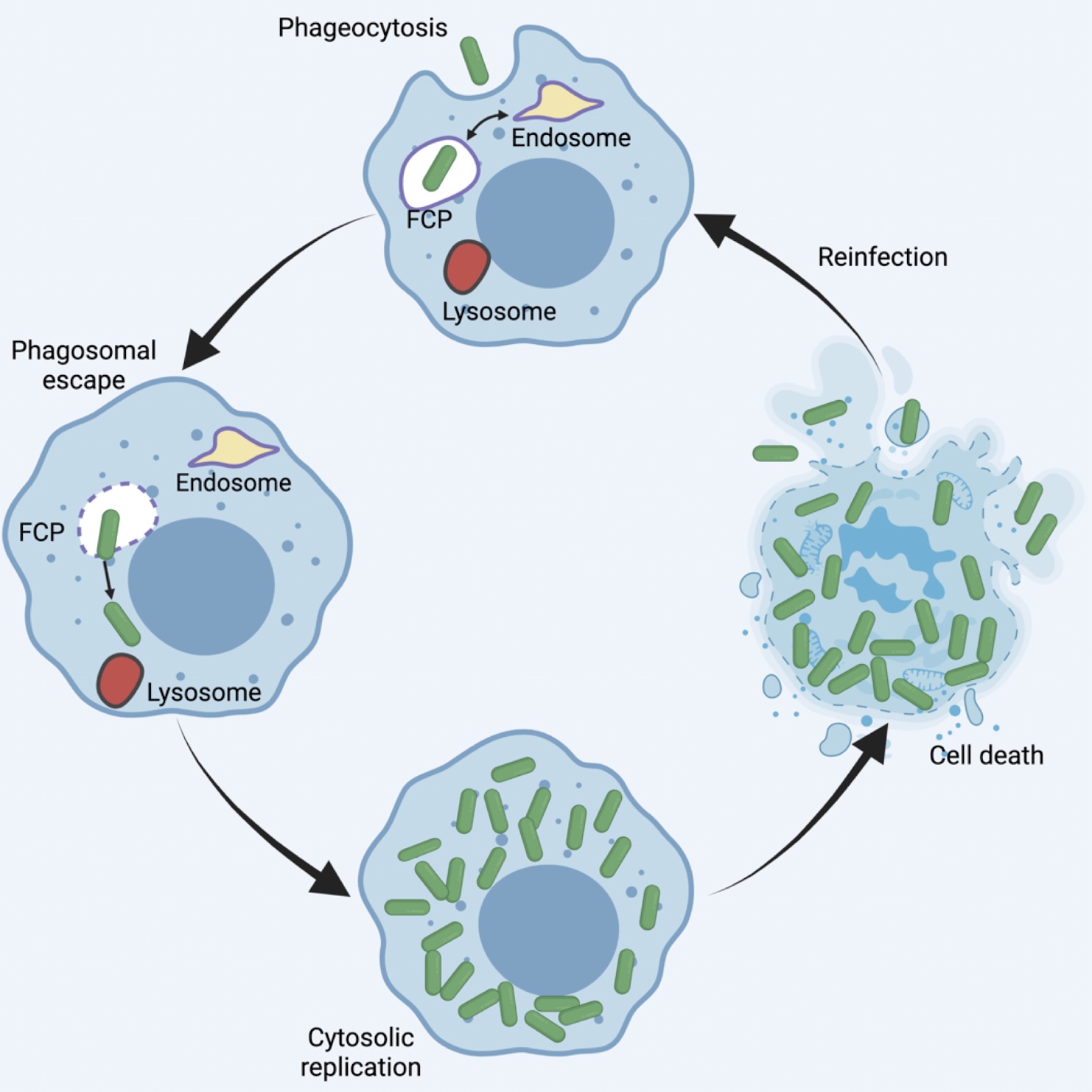
Francisella tularensis is among the most lethal bacterial pathogens in existence — inhalation of just a few bacteria can cause a lethal infection. F. tularensis uses the Francisella pathogenicity island type 6 secretion (T6S) system to escape from the vacuole of phagocytes, replicating in the cytosolic compartment. A related bacterium, Francisella philomiragia, encodes the same T6S but is harmless to immunocompetent people.

However, in people who cannot generate reactive oxygen species in phagocytes, this environmental pathogen becomes deadly. F. philomiragia therefore has immense virulence potential that is completely counteracted by an intact innate immune response. We are using F. philomiragia to learn fundamental truths within innate immune signaling.